
fbpx
Live your imaginable.
Research

Author: TJ Nadres

Celebrating Being Average

I’m not sure how common this experience is and maybe you can tell me. I will sometimes find
myself scrolling through my newsfeed on social media and experiencing feelings of inadequacy,
lacking, or not-enough-ness. I read all the stories about others being the best, the top, or
achieving much success and, while I celebrate their joys (I truly do), I can’t help but feel a bit of
sting as I look inward. I ask myself, “what do you have to show for?” or “what are you the best
at?” and then I quickly go to “maybe you’re just jealous” or “why can’t you just be happy for
them and leave it at that?”
I’ve been reflecting on this experience and thought it might be worthwhile sharing just in case
others are experiencing the same thing. I like to think of myself as average so there’s a pretty
good chance the other average ones may understand these sentiments. In my reflections, I
decided that, instead of trying to find what I have to show for, it might be helpful to think about
what makes me average and celebrate that instead. Just for context, here is the definition of
average that I’m using as reference: of the usual or ordinary standard, level, or quantity.
Here’s an initial list of my averages:

  1. I’m an average student. I never really received high grades and even now, as I take a
    master’s program in a topic I find fascinating, I’m still performing at an average mark
    despite a lot of effort I’m putting into my studies. I recently received my average grade
    for my latest module and am over the moon about it!
  2. I’m an average reader. I like buying books that I find interesting and will take forever to
    read them (if I even get to it) and I cannot, for the life of me, quote passages or one-
    liners in an intellectual conversation. When I do get to finish a book, I feel so
    accomplished!
  3. I’m an average cook. I enjoy preparing meals for my family and friends and I can follow a
    recipe well enough, and while serving it I will ask “Do you like it?” just because no one is
    commenting about the food. And if they say, “Yeah it’s good!” I celebrate that even if
    they’re just trying to be polite or thankful that I didn’t mess it up so badly.
  4. I’m an average athlete. I was never the strongest rower or runner in my team and there
    were always others who had natural strengths in whatever sport they got into. I have to
    exert extra effort to get by and would find my space in the middle of the pack and enjoy
    myself there.
  5. I’m an average entrepreneur. I’ve been running a business for over a decade, and we’ve
    scaled it to an average size, and I still stay up at night worrying about the next pay cycles
    and keeping things afloat. I celebrate the moments when we get through the difficult
    times together with my team.
    I can add so much more to this list, but I don’t really feel a need to. It’s an average amount to
    reinforce just how average I am. Please don’t mistake this article to mean I am looking for
    affirmation on things I’m great at. I like to think I’m aware of the things I can do quite well. I just
    thought it would be nice for a change to allow ourselves to celebrate being average because

most of us are and that’s perfectly okay. I’d love to hear your average stories so I can celebrate them with you!

How Coaching and Therapy Supported my Mental Health

It may be a coincidence that October 10 is both the anniversary of Haraya Coaching and the commemoration of World Mental Health Day, and for the past 11 years that we’ve grown in our practice, I am more convinced that it is a meaningful integration. I’ve personally seen how coaching can support mental wellness and I feel so much more resolve to share how this is true. I am often asked about the difference between coaching and therapy, and while there are many resources one might find online, and I could share more formal definitions of these practices, I thought it would be useful to share my own personal stories of how both modalities have helped me.

Coaching helped me re-design my life and move forward.
I was diagnosed with stage 3 breast cancer in 2018 and had a wonderful support system around me. Loved ones were around to be with me all throughout my journey and I never really felt alone. I knew I was loved and that gave me a lot of strength. It was initially difficult though, for me to see beyond my illness. I couldn’t see too far into the future and worried about others around me. How would I continue to make a difference and contribute to the world? I felt I was being derailed from my life plans. I was so blessed that a friend offered to coach me through my cancer journey and allowed me to reflect on how this experience integrates into my life and I found a new sense of purpose – one that did not disregard my cancer but embraced it as a blessing that could help me become a different version of me. Coaching supported me in the
design of that new purpose and in taking accountability for making it real.

Therapy helped me understand my inner thoughts and feelings.
Fast-forward to 2020 when the world came to a standstill caused by Covid, and the normssuddenly became isolation and avoidance of human contact. The world was grieving. We lost friends and family to this dreadful disease. We also lost human connection. I found myself catatonic at first, watching the news, not knowing what to do, and feeling terribly sad and angry. I was sad from the loss of life and freedoms and angry with the government for everything else. I felt betrayed and wanted to lash out, but I didn’t know how and where to do so. Every day my anger brewed deeper and stronger. While I was able to rely on my family and team for support and we created plans for moving forward with the business and helping others to cope during that time, I could still sense that anger brewing and boiling day by day. That was when I decided to seek help. I scheduled an appointment with a psychologist and one session of release became a weekly habit for over a year. These sessions helped me to understand where the hurt and anger were coming from and to release my thoughts and feelings without judgement. I didn’t need to make any plans because those were already happening. I just needed to look inward and honor what was going on inside me.

What was common about these two situations?
· I was experiencing challenges in my mind. My thoughts were getting in the way of me
showing up in the world as my best self.
· I needed help. I knew that having someone to talk to would be valuable to me in
processing my thoughts.

What was different about them?
· In my cancer experience, I had acceptance of my illness and felt a strong resolve to
overcome it, but I just didn’t know how I could move forward beyond the disease. I
needed help to imagine a different version of me and my future, and to begin taking
steps towards it.
· In my Covid experience, I was already moving forward with steps and externally felt
clarity about what I wanted to do. I needed help in unpacking the darkness that seemed
to be lingering in my thoughts despite everything going in the right direction.

As a professional coach myself, I knew that I couldn’t get through these situations alone. Having the right support in both these experiences was so critical for me and I feel very blessed to understand what I needed in those moments and to have direct access to both types of help. I know that many are still struggling and don’t realize they need help. And others know they need help but not sure what type of help and where to get it. I hope that, by sharing my own stories, it might shed some light and nudge others to seek support from the right sources.

Three Leadership Beliefs I Changed my Mind About (and how neuroscience helped me get there)

When did you last change your mind about something? Maybe it was this morning when you decided to wear a different pair of pants. Perhaps it was last night when you were planning a family vacation and thought of visiting a different place. It could even be last week when your friend convinced you that pineapple on pizza is actually yummy. We go through decisions like these so often we may not even realize just how much we change our minds about simple and not-so-simple things.

I’ve been reflecting about significant perspectives that I found myself re-thinking in the past few years, and one big theme is leadership. As a leader myself managing several businesses, who also works as a coach with a lot of leaders in organizations and teams, I’ve been trying to observe and understand what drives our behaviors and how we lead others. What practices help or hinder us from being our best as leaders? How can we continuously bring out the best in ourselves and our people?

In this learning journey, I have come to change my mind about how I should show up as a leader. A big contributor to these shifts is my continuous learning about our brain and how it works. Here are three things that have adjusted for me and the references that helped.

1. Leaders don’t show emotions.

I used to think that showing emotions as a leader, especially crying, is a sign of weakness. Now I know that my emotions are simply an indication of something that is valuable to me, and if I share that with my team, they will learn more about me and what I value, and even support my pursuit to be consistent with those values. Allowing my team members to share their feelings with me and with each other also helps us to create better connections, and work more cohesively. Thanks to the work of Dr. Lisa Feldman-Barrett who wrote the book “How Emotions are Made” and Dr. Susan David who wrote “Emotional Agility,” I have been learning to create better awareness of my emotions and what they mean to me, as well as cognizance of others’ emotions and what they mean to them.

2. Leaders don’t bring personal concerns to work.

I used to subscribe to the notion that one should “check their personal lives at the door” when they come to work every day. You are on “company time” so any time your mind wanders to personal thoughts such as a sick child or an argument with a family member, you are doing the company a disservice and should just learn to lock those thoughts away. Now I understand that I come to my workplace as a completely whole person who has various facets of my life, and if my brain is not at its best because those other facets are not going well, I will not be at my best for my company anyway. I love the work of Dr. Sarah McKay, neuroscientist and author of “In Her Head,” who shares a simple model of how one’s mindset, one’s environment and one’s physiological state all play a critical role in supporting a healthy brain. Integrating brain-healthy habits into my day no longer makes me feel guilty for spending time on myself. 

3. Leaders are direct and completely fact-based.

I used to believe that the best way of communicating is to be completely direct, objective and fact-based. Now I know that I also have to be held accountable for the impact of my message on others. How they receive my message is equally important in determining the effectiveness of our communication. Thanks to the lessons I learn from my favorite podcast Huberman Lab, hosted by Stanford professor Dr. Andrew Huberman, I understand how the different chemicals in our brains are triggered and how they influence our behaviors. 

By understanding the mechanisms of how our own mind works, I’ve learned to change my mind about what good leadership looks and feels like. I’m still learning and may continue to adjust some of my beliefs, but that is the value of continuous learning or neuroplasticity (the ability of the brain to form new connections). My encouragement to other leaders is to keep learning too. If the best athletes continue to practice their sport even after they’ve won several medals and trophies, then leaders should continue practicing their craft as well.

I’m also fascinated by neuroscience because it helps me to reinforce my belief that, while we might look and sound different from others and while our principles might be shaped by our environment and culture, underneath we are all the same. If we get better at understanding why and how we think, feel and behave, we might be more capable of looking at others past the prejudices and judgements and simply accept that we are all human beings doing the best we can to thrive.

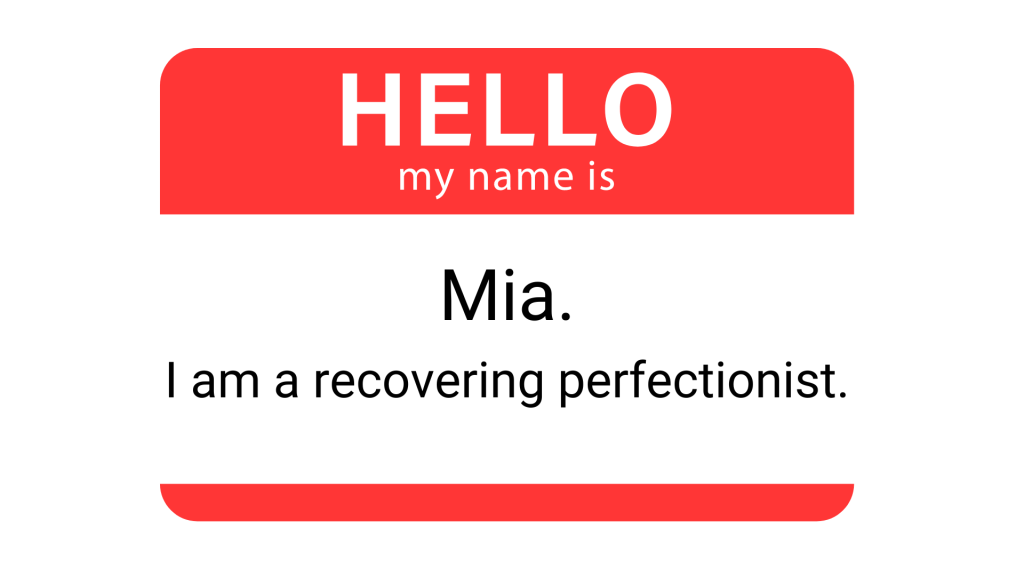
Letting Go of Perfectionism

We all want to do well. But what about when this desire to do well prevents us from even starting something?

I’ve been on a long journey of letting go of perfectionism and embracing who I am. I even started a community called The Parent in Progress to document my experience as a work-in-progress new parent and to support other new parents.

I am sharing a few things I’ve learned and reflected on in this journey.

I know that perfection is impossible, but why do I still want to be perfect?

“Progress over perfection” is an overused (but admittedly, appropriate) quote you’ll hear. But, why is it so hard to truly let go of perfection and embrace this mindset?

When I think about my personal definition of perfection, it’s this expectation that I have to do it all and I will do it without mistakes, without breaks and without help. Written down, it seems like such an unrealistic, impossible expectation of myself, doesn’t it? No human can meet that.

Perhaps, moving away from perfection means moving towards our own humanity. It is about accepting that we will make mistakes, we will need breaks, and we need others’ help. It is making the courageous choice to say “I am enough”.

Brene Brown expands on this beautifully in her book, The Gifts of Imperfection: “No matter what gets done and how much is left undone, I am enough. It’s going to bed at night thinking, ‘Yes, I am imperfect and vulnerable and sometimes afraid, but that doesn’t change the truth that I am also brave and worthy of love and belonging’.”

There is so much power and freedom in embracing and accepting who we are, as is, in this moment.

If I let go of perfection, will that mean I won’t strive to do my best?

Initially, I resisted this new mindset of “I am enough” because I thought it might mean that I wouldn’t want to improve and do my best anymore (and I’ve heard this resistance from others as well).

For me, this resistance comes from seeing the many ways that being a perfectionist has benefitted me to achieve a goal and to do good work. But, if I further reflect on it, I can recall the many times perfectionism has not helped me – the indecision, the countless unnecessary revisions, the stress of it all. I want a healthier way of approaching things.

I’ve realized that believing “I am enough” and wanting to improve is not an ‘Either-or’ situation; we can believe in both. This quote put it best:

Instead of perfection, what can I focus on instead?

In coaching, we believe that when our actions are aligned with our intention, we can create more sustainable change.

In overcoming perfectionism, this can mean shifting our mindset from the abstract, unrealistic ideal of perfection to clear, defined intentions and values that we personally hold important. We can reflect on what drives us and what’s behind this initial desire for perfection.

Some reflections questions we can think about:

  • How has perfectionism helped you? How has it not helped you?
  • What positive impact would believing “I am enough” have on you?
  • What is most important to you in life? What values do you want to live by?

By asking ourselves these questions, we can be clearer on what we really want. If the goals are clear, it is easier to work towards that goal.

There is no quick fix for perfectionism. It might never go away fully and certain situations may trigger us. At the end of the day, it’s about mindfully living out our intentions and values. It’s about celebrating ourselves and our progress.

How can embracing your imperfection and living more intentionally benefit you? Would you like support to make that happen? Get in touch with Haraya to see how coaching can help you.

Why Coaching in Education is a Big Win

I had been in the field of education for 12 years prior to joining APEC Schools. I have taught in several schools both here and abroad and in both the elementary and secondary levels. I had been a classroom teacher, a class adviser, a subject coordinator, and a teacher trainer. I could really say that I have done much in the academe that it is so easy to believe that we have tried almost everything with regard to improving the quality of the field. That was until I was introduced to Coaching.

I was first introduced to coaching through interactions and research in APEC Schools. We are fortunate to be managed not only by educators, but by people from various industries. And from them came the knowledge that once previously is only known from the world of business – they knew about coaching.

Our leaders were coached and in their own rights were coaching as well. They used it in their past companies in handling their people. They were also professionally developed using the same approach. They knew it worked and the benefits attached to it.

So when the idea of coaching was raised to me as a professional development tool for teachers, I got interested. This has not been done in any other educational institution just yet. To give a bit of background, most schools use the feedback approach. This approach is usually done after class observations by supervisors. As a general framework for this approach, the supervisor (1) asks what teachers think they did and didn’t do well, (2) shares what they think the teacher did and didn’t do well, and (3) decides on next steps.

This was the standard practice and APEC Schools did subscribe to this as well. And even if there are advantages, we recognised some downside to it, namely:

  1. It puts the supervisor as the expert, not the teacher.  This is an issue of empowerment.
  2. Its focus is narrow.  It dissects a very specific classroom scenario.  This is an issue of efficacy.
  3. It often makes teachers defensive.  It requires a very open teacher to not take the feedback personally.  This is an issue of motivation.

Given the disadvantages, we felt that the time was ripe for change.  To push for better quality of education, we have to push for better quality of teachers. We are already offering  them various skills training, professional development courses, support and supervision.  But there is one aspect that is sorely lacking – teacher empowerment and a mentality for self-direction. These things could not easily be honed through training and mentoring. So what is the solution? Coaching.

Believing in the power of Coaching, we took the leap and started our journey back in 2018. As a school, we didn’t have the budget so we had to find a way to make it more affordable.  We knew that a big chunk of what can cut the cost is if we do it internally.  So we “DIYed” building our coaching culture.  Here’s what we did.

  1. We assigned one person to attend the expensive coach training and have this person lead the coaching program of the school.  This person, in turn, trained our academic managers on coaching.
  2. We included coaching in the expected interactions types with teachers.
  3. We partnered with coaching institutions like Haraya Coaching to provide additional pro-bono coaching sessions to our teachers.

It has been five years since we started coaching in our school.  We are now in what Reza Rahmani, PCC, calls the embedding phase.  It is in this phase that organizations roll out coaching processes and programs. It is also in this phase that coaching is experienced not only by select leaders but by other members of the organization.  In our case, those are the teachers.  And though we are not yet at the transforming phase, which is the phase where coaching is more integrated in the organization’s system, we are already seeing results.  

  • Improved leadership.   Through coaching, our leaders found a new way to support teachers.  No longer is feedback their default.  No longer do they see themselves as experts.  They have transitioned to seeing their teachers as the more knowledgeable, more accountable person in the conversation.  Coaching became their way to support teachers more genuinely and effectively.
  • Increased empowerment of teachers.  Through coaching, teachers became more accountable.  Once the answers started coming from them instead of their supervisor, they owned the actions more.  They became empowered to drive the change they want to see in the classroom.  This practice directly impacted quality of delivery which has consistently earned highly in the organization’s Performance Assessment KRA.
  • Increased engagement.  The results of the 2021 Employee Engagement Survey showed a remarkable increase in overall employee engagement which is 5 points significantly higher than the 2017 results.  This score is further broken down into 90% favorable score on Training and Learning and 91% favorable score on Wellbeing.  It is to be noted that the Training and Learning score is significantly higher than the Education norm.

And to top it all off, very recently, we were recognized by ICF Philippines by bestowing upon us the inaugural 2022 Prism Award. This is a confirmation of the coaching culture we built in APEC Schools.  It is a milestone in our 5-year journey.  But it is not just a win for one school.  It is a win for the whole academic community as…

  1. It confirmed that coaching can be built and used in the education space.  Coaching is no longer a tool of companies.  It is also a developmental  tool of academic institutions.
  2. It showed that coaching can be affordable.  There are ways to make it less expensive.  Academic institutions can afford the investment.
  3. It proved that we can reinvent processes in education.  We can change practices that no longer work.  We can be more intentional in choosing techniques and tools to support our teachers.   We can be progressive. 

Given this meaningful journey of our institution, we can point out that coaching in the field of education works. It is an approach that, frankly speaking, should have been used for teacher development decades ago! We could have saved years on managing teacher burnout and lack of motivation.  We could have honed earlier on empowered, motivated and happier teachers.

As such, we want to encourage educational institutions to adopt a coaching culture as this could really be that transformative shift  we are all looking for.  Coaching in education is a big win for us.  Make it a win for you too.  

I have been in education for 20 years.  Admittedly, I have not seen everything, but I have seen a lot. And I am so blessed to have seen the day that coaching is used in the education space. Its not everyday you can say that you are a part of something done for the first time, but here I am – I am part of an institution that supports teachers through coaching and who develops their managers to be coaches. I have always been proud that I am an educator and now I am also deeply honored to be a coach. 

Mary Ann Barcelon, ACC
APEC Schools

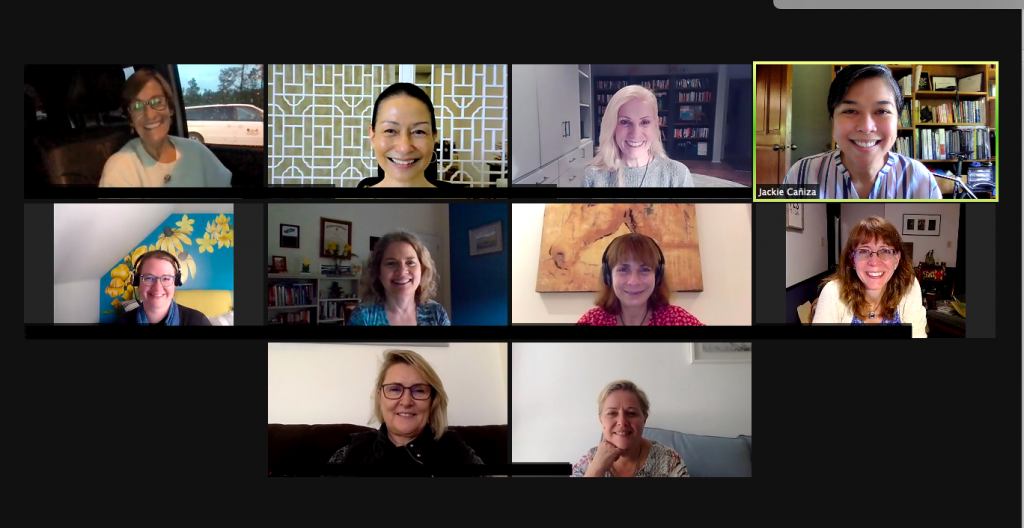
How learning about my brain helped me cope with the Covid pandemic

Years from now, when we look back at our Covid experience and tell the stories to our grandkids, mine will definitely include this one. My journey through the pandemic ran in parallel to my learning journey of Neuro-Transformational Coaching, and I’m certain that this course saved me in many ways.

I had already registered to attend the face-to-face course in Singapore scheduled in March 2020, which is exactly when the world got locked down. The program leaders were quick to pivot and offered the online option soon after. I hesitated at first because I thought it would be better for me to wait for the next face to face offering instead. I knew my learning style would be better off with a live class than online. But after careful thought and still with a lot of apprehension, I decided to take the leap and joined the Azalea pod. In hindsight, this was probably the best gift I could give myself at a time when there were so many reasons to feel hopeless and helpless.

Not only did I learn how to support my coaching clients by understanding the brain-science behind the work I do, I also learned about how my own brain was operating and why I was experiencing this pandemic in the way I was. I felt supported by a wonderful group of women who were learning with me and experiencing this global crisis in their own ways, and holding such a compassionate space for each other as we were telling our stories. I learned from each of them by watching them coach, hearing their thoughts, and being inspired by their generosity.

Today I received my certification telling me that I’m an official Neuro-Transformational Coach, which also means for me that I am a pandemic thriver!

Thank you, Ann, Ursula and the beautiful Azalea souls for walking with me in the past year. You earned a very special place in my heart!

COURAGE AND THE OFTEN OVERLOOKED INGREDIENT

What are you really asking others when you challenge them to be more courageous?

Courage, a word that comes up time and time again when we do our deep dive interviews with new corporate clients that are keen to under our Kina-Iya leadership development program. 

In organizations that we speak to today, courage is typically associated with speaking up, making tough calls, taking accountability, lead and step up, challenge, debate ,engaging in honest and direct conversations and healthy conflict.  Leaders in organization long for their people AND for themselves to show up in braver ways.  

This topic of courage is close to my heart, there are so many intricate, sensitive and liberating dimensions to it, helping people take courageous actions and show up with more authentic presence. 

While in this article I will be looking at it in the context of leadership, all the concepts can be directly applied  and equally relevant to home and community environments as well. 

So, when asking someone to BE COURAGEOUS – what does this really mean? 

Let’s quickly look into this concept of Courage, it’s defined broadly as the choice and willingness to confront agony, pain, danger, uncertainty or intimidation (Wikipedia). The origin of the word comes from the Latin word Cor, which means heart and in its original definition it meant: “To speak one’s mind by telling all of one’s heart” (Dr. Brown). 

In the research by Dr. Brené Brown, an American professor who spent decades studying courage, vulnerability, shame, connection and empathy, it was revealed that: 

There is no courage without vulnerability.

Vulnerability is uncertainty, risk and emotional exposure (Dr. Brown). Facing situations where the outcome is uncertain, or opening ourselves up to being hurt, to fail and to stumble. 

So actually when leaders in our leadership development program long for their people and themselves to be more courageous we are ultimately asking people – to be more VULNERABLE

The often overlooked ingredient to facilitating courageous spaces.  

That is a big ask. 

What does this mean for leaders?

In my one-on-one coaching journeys with leaders, this topic of courage and vulnerability comes up more often than not. Some of the areas and questions we often explore together and that may be useful to kick-off your thinking and exploration as you are reading this are: 

First and foremost GET HONEST with ourselves: 

  • Where in my leadership would I like to show up more courageously?
  • How comfortable am I with being vulnerable myself?
  • What needs my attention to grow my comfort level?

Secondly, TAKE STOCK:

  • Where would I like my team to show up more courageously? 
  • What am I already doing that facilitates vulnerable and courageous conversations and actions in that space? 
  • What is missing? 

Lastly, TAKE ACTION:

  • What is ONE way in which I, as a leader, can SHOW UP more vulnerable and courageous with my team?
  • What is ONE action I can do to foster a more courageous space for my team? 

I am acutely aware that this topic is not an easy one to tackle, let’s face it, more often than not, just the thought of “having to be vulnerable” is scary and triggers us to put our guard up quickly! 

However, in order to ignite more courage, we need to hold space for BOTH courage AND vulnerability in our work environment. We need to direct our attention to creating and facilitating a space that FEELS safe and allows for vulnerability to emerge.  

Environments where people  ask for what they need, speak their truth, own their mistakes, set clear expectations and reach out for support when needed. 

Imagine if we were able to create those liberating workspaces all around us – what would be possible? 

Get in touch: 

To kick of your journey on creating braver leaders and more courageous and safe spaces for vulnerability and connection, get in touch with us and check out our Kina-Iya leadership training and coaching program. 

If you want to journey and rumble with your own vulnerability and courage work with our Certified Daring Way™ Facilitator-Life Coach in our team. 

Kinaiya: Leadership Development Coaching

Through our leadership development programs at Haraya Coaching, we’ve worked with leaders from various levels, from CEO’s and business owners to first line supervisors. We observed that, regardless of level, they have common challenges that seem to get in the way of their best performance. In most cases they know what they want to achieve. They set their targets, have big goals and even know what milestones are needed to reach their desired state. Yet, there are still questions in their minds. The questions we hear more often can be categorized into: questions about themselves and questions about their team. Here’s what we hear:

  • Questions about the self
    • Am I the right leader for this team?
    • Do I have what it takes to lead this team?
  • Questions about the team
    • How do I get my team on board and aligned?
    • How do I keep my team members motivated to perform at their best?

Hearing these questions prompted us to reflect on how we can continue to enhance our leadership development program in a way that supports these leaders in their pursuit of their answers.
As Coaches, our strength is in asking questions, so we started by putting together these questions to help leaders begin to reflect on what needs their attention. The questions have been categorized into the four themes that we’ve found to be the most helpful so far in our coaching practice.
If you are a leader, we highly encourage you to reflect on these:

  • Questions about Cognizance
    • How aware are you of your style and the impact of that style to others?
    • How aware are you of your team members’ styles and preferred ways of working?
    • What are your team members’ values and how do they align with the organization’s?
    • What strengths do your team members have that you can leverage?
  • Questions about Cause
    • How clear is your leadership purpose?
    • What impact do you want to create as a leader?
    • How clear is the team’s bigger purpose and are all team members aligned?
  • Questions about Courage
    • How much do you speak the truth without apprehension?
    • How safe do your team members feel to speak their mind without fear or apprehension?
  • Questions about Care
    • How well are you keeping yourself balanced?
    • How are you helping your team members stay well?

Of course it doesn’t end with just having the answers to these questions. Leaders must continuously find ways to enhance their use of these four practices. Having a Coach helps to drive accountability and focus on what needs attention. If you are a leader and you would like to enhance your ability to practice these, let us know and we can talk about how our leadership development program will support you.